


Technology
Chasing artificial general intelligence: China between breakthroughs and bottlenecks
Read more


The competitive landscape is beginning to resemble the AI large model boom of 2023. Major technology companies such as Huawei, Tencent, and Alibaba are either building their own humanoid robotics capabilities or investing in emerging startups. These firms are leveraging their technological expertise and deep financial resources to stake a claim in the sector’s early growth phase.
Interest in humanoid robotics extends beyond traditional tech players. Automakers including XPeng, BYD, and GAC are actively engaging in the field, alongside consumer electronics and appliance manufacturers like Midea, Haier, and Xiaomi. This cross-sector involvement reflects growing recognition of robotics’ transformative potential across industries.
At the startup level, competition is intensifying. Four companies have already reached valuations above CNY 5 billion:
These startups represent diverse approaches to the robotics value chain, from core technology to full-stack integration.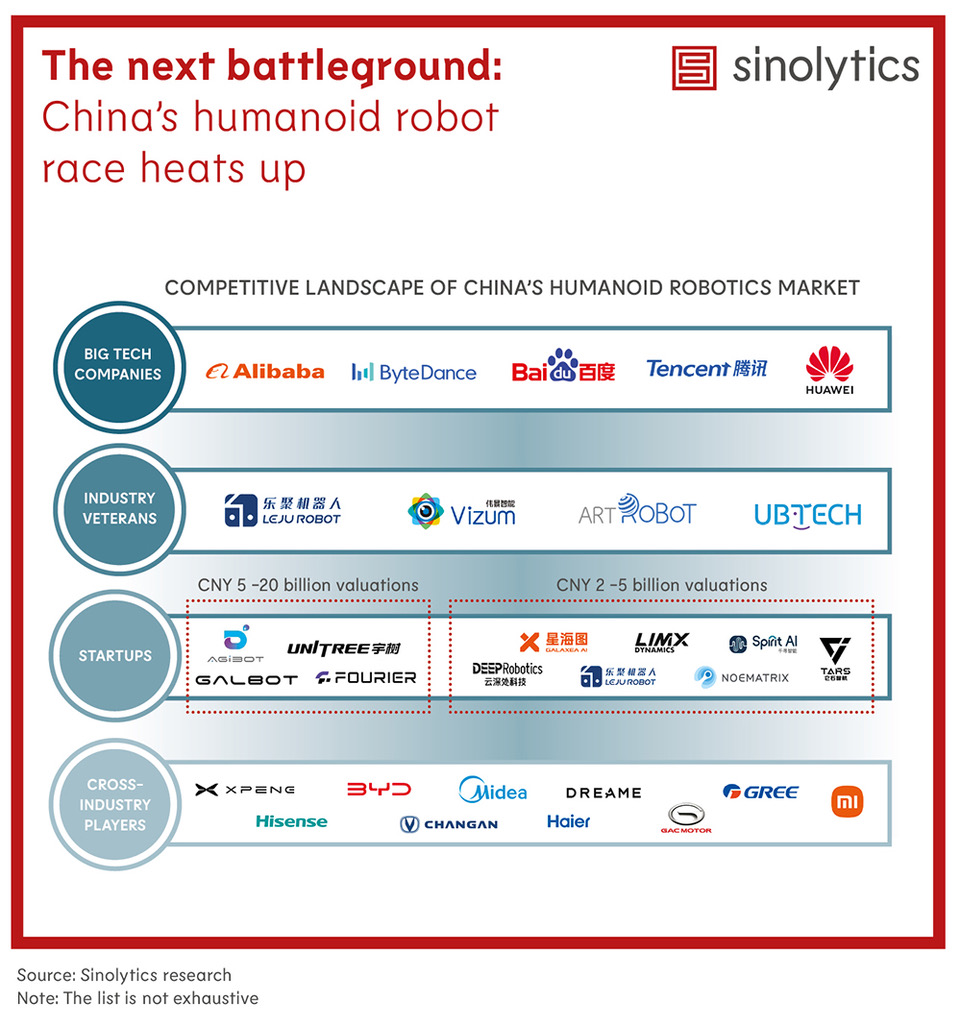
The rapid surge in funding and attention has sparked concerns over a potential investment bubble. However, many observers interpret the current activity as part of a typical hype cycle that often accompanies major technological shifts. While short-term overheating is possible, broader consensus expects eventual market normalization as the technology matures.
Commercial sales of humanoid robots remain modest but are rising fast. In 2024, China sold approximately 2,400 units. A recent report from GGII projects sales to reach 7,300 units in 2025 and grow to 162,500 by 2030. If realized, this would represent roughly half of global humanoid robot sales, underscoring China’s ambition to lead in the global robotics race.
The humanoid robotics sector in China is entering a phase of intense activity, characterized by strong investment, broad industry participation, and optimistic growth projections. While some caution that the current momentum may not be sustainable in the short term, the broader trajectory suggests that humanoid robotics will play a central role in China’s next wave of technological innovation


