


Technology
Shengyi Zhang on AI safety, geopolitical competition, and why most AI narratives miss the point
Read more


Beijing has elevated robotics from a manufacturing support tool to a core component of its modern industrial system. Humanoid robots are now framed as potentially disruptive platforms—comparable to computers or new-energy vehicles—essential for boosting productivity and securing China’s position in global technology competition. The 15th Five-Year Plan signals a shift from rapid expansion to higher-quality, market-oriented development, with a focus on core technology breakthroughs, domestic supply chain resilience, and establishing clear industry standards, though officials remain wary of speculative investment bubbles.
The commercial landscape is heating up as multiple players vie for dominance. While Unitree Robotics led global shipments in 2025, it was surpassed by competitor AgiBot in the first half of 2026, highlighting the market's dynamic nature. Unitree's successful IPO in August 2026, with a valuation reaching 219 times its price-to-earnings (P/E) ratio, has ignited a debate on how to value these hardware-centric firms. The high valuation reflects investor confidence in firms that can achieve profitability, a rare feat in a capital-intensive sector.
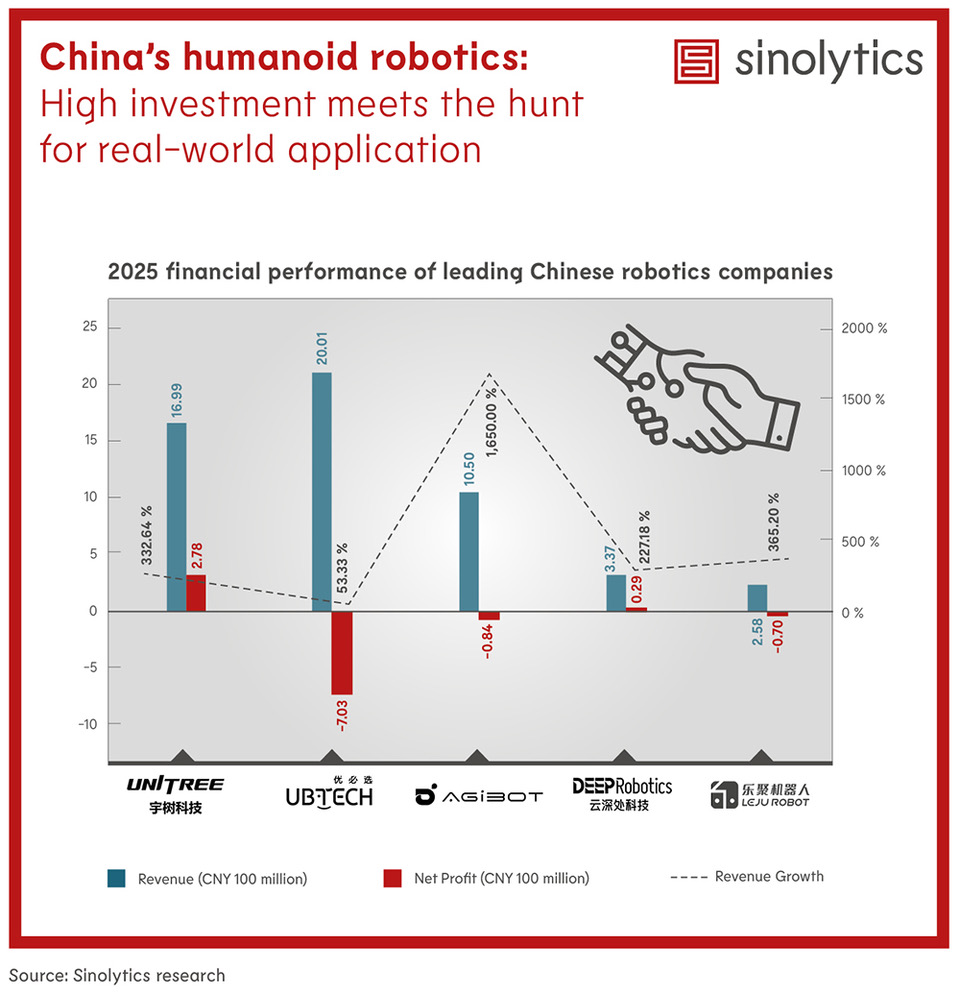
China's automotive giants are moving aggressively into robotics. This trend is driven by clear synergies, as automakers can leverage significant supply chain overlaps, including motors, electronic controls, sensors, and chips. They see their own labor-intensive vehicle assembly lines as a prime initial deployment scenario, positioning them as both developers and major customers.
Despite the sector's momentum, significant hurdles remain. The industry's core challenge is a stark imbalance between massive funding on the supply side and a lack of large-scale, paying customers on the demand side. For leading firms like Unitree, this means revenue remains heavily concentrated in the research and education sectors—accounting for 73.6% of its humanoid robot sales in the first nine months of 2025. Furthermore, growing regulatory pressures, such as the U.S. FCC's decision to place advanced robotics on its "Covered List," could pose risks to overseas expansion.

