


Geopolitics
Singapore's trade: AI drives, the rest lags behind
Read more


For Southeast Asian governments, this creates the complex challenge of harnessing AI's potential for development and public benefit, ensuring appropriate regulation, and maintaining strategic autonomy amid growing external influence.
China positions itself as a generous partner in digital development, offering affordable AI technologies "without lectures" and pledging to respect national digital sovereignty. Through the Digital Silk Road, Beijing has for years invested in telecommunications, surveillance technologies, and AI startups.
It has established bilateral agreements on digital cooperation with several Southeast Asian countries, often complemented by training programs, such as those supporting smart city applications in Bangkok or the rollout of Chinese surveillance systems in Cambodia.
China's engagement in building digital infrastructure, particularly 5G networks and cloud services, has laid a strong foundation and created strategic advantages for Chinese AI activities in the region.
In September 2025, China and ASEAN established a joint AI Cooperation Center and announced a three-year plan for diverse collaborative projects, including multilingual AI models and a regional computing alliance.
The United States, by contrast, pursues a market-driven and values-based approach. It focuses on education programs and local capacity-building initiatives aimed at embedding long-term standards and democratic principles.
Washington promotes bi- and multilateral partnerships with countries such as Singapore, Vietnam, and Indonesia, presenting itself as a partner for "open, transparent, and inclusive AI." At the same time, the U.S. uses diplomatic channels to encourage Southeast Asian nations to align more closely with Western standards and U.S. technology platforms.
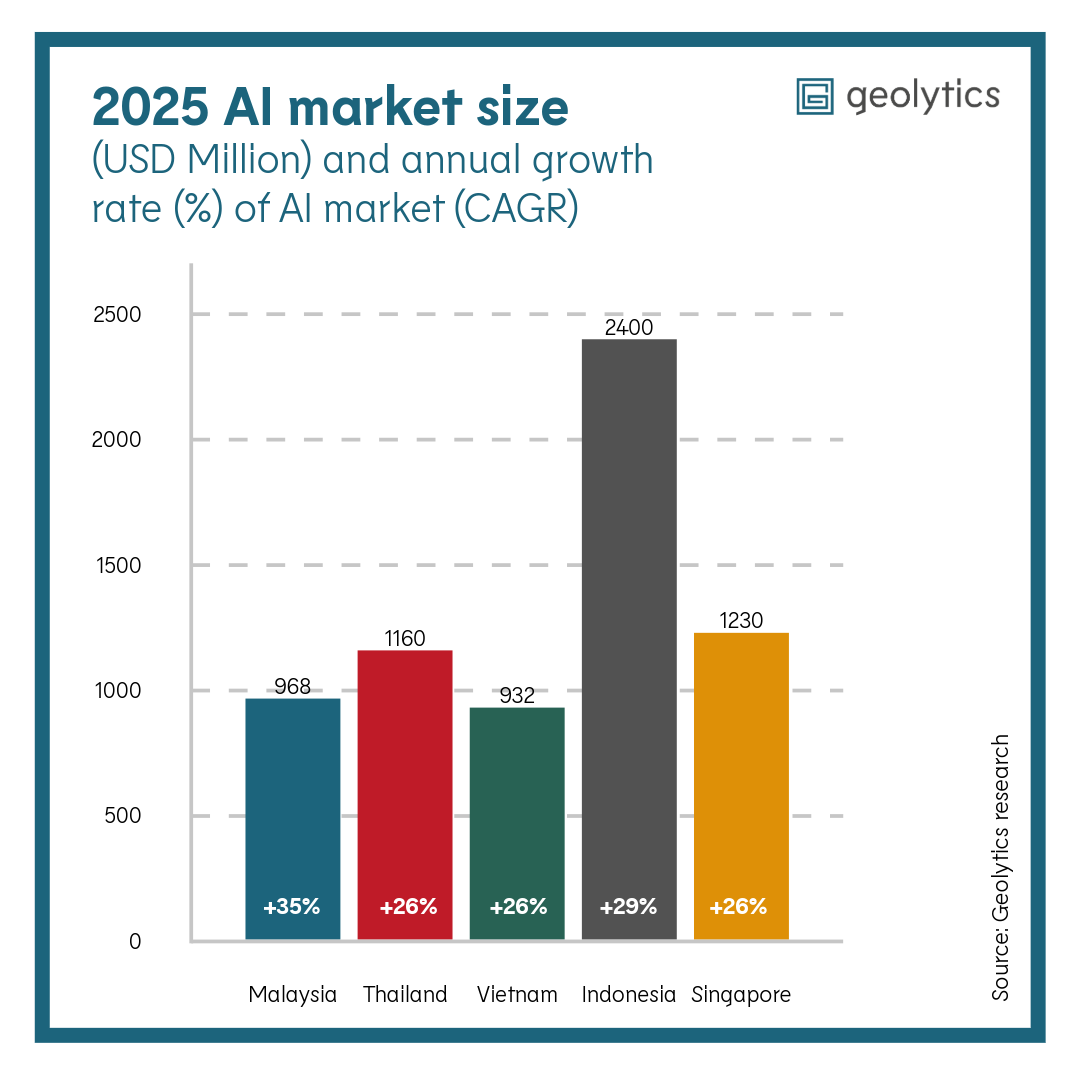
On the commercial side, American tech giants (Microsoft, Google, Amazon, and Nvidia) are making large-scale investments in data centers, cloud services, and AI infrastructure across Malaysia, Thailand, Vietnam, Indonesia, and Singapore. Their unrestricted access to advanced AI chips provides a major advantage over Chinese competitors, who face U.S. export controls and still lack viable domestic alternatives.
The two powers' activities in the region are far from frictionless. The United States exerts strong pressure to prevent the export of U.S. AI chips to China and to deny Chinese AI firms access to advanced computing power and American capital.
This has put Singapore in a difficult position, as Chinese companies have used the city-state for "Singapore-washing" to circumvent sanctions. Reports have also surfaced from other countries of U.S. interventions against Chinese digital infrastructure projects.
So far, most Southeast Asian nations have sought to benefit from engagement with both China and the United States. Yet as the rivalry between the two powers intensifies, the region's countries may soon face a defining choice: whether to shape their AI future in alignment with China—or with the United States.
Originally published in a shorter form on F.A.Z.

