


Geopolitics
Singapore's trade: AI drives, the rest lags behind
Read more


While some adjustments were moderated during legislative debate the most aggressive measures remain in place for strategic sectors, especially for automotive parts. The new tariffs will apply from January 2026 to imports from all countries without a free trade agreement with Mexico, including India, South Korea, and Thailand.
Although not explicitly stated, China is the primary target of these measures. Over the past decade, China has become Mexico's second-largest trade partner, accounting for roughly 20 percent of Mexico's imports, particularly in electrical machinery, automotive components, and industrial equipment – sectors most affected by the new tariffs. Mexican industry associations in steel, automotive, and textiles have strongly supported the reform, citing concerns that Chinese overcapacity threatens domestic production. This move mirrors similar protectionist trends in other emerging markets such as Brazil and Indonesia.
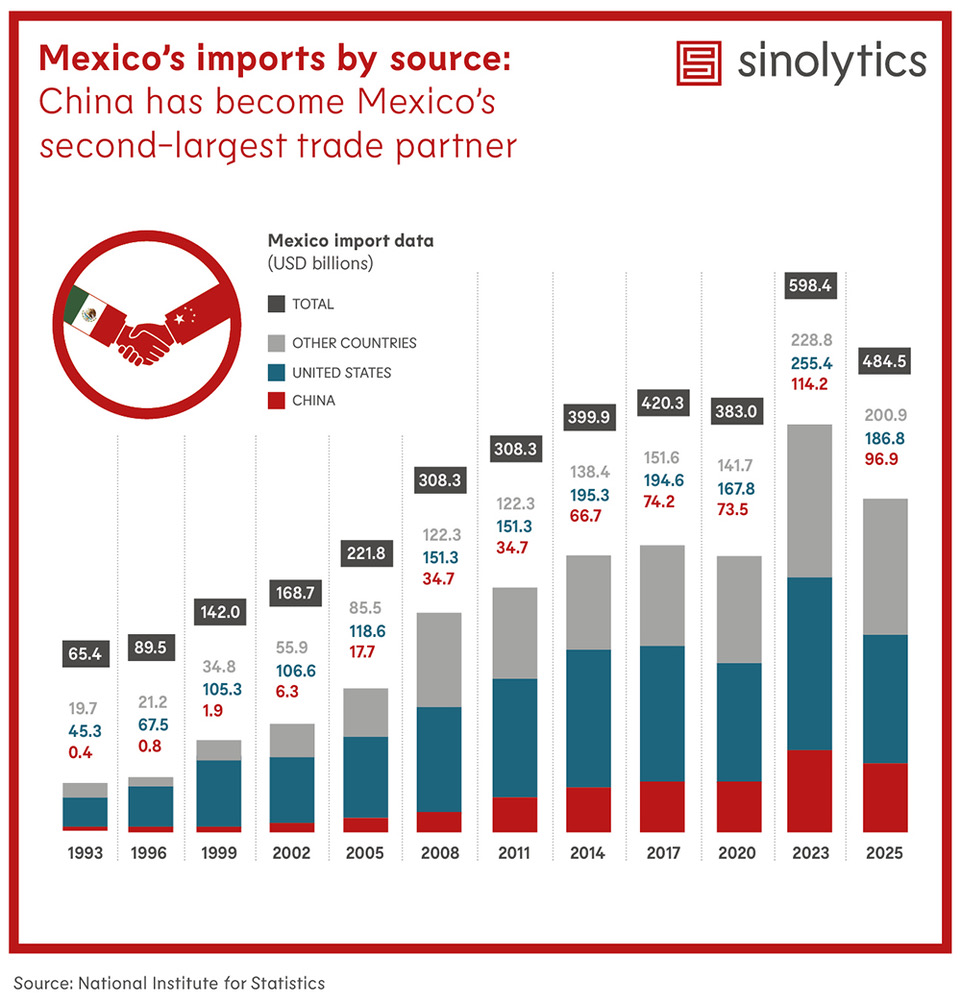
The tariff hike is not solely driven by domestic concerns. It reflects Mexico's response to sustained pressure from the United States, which has leveraged tariff threats and ongoing USMCA renegotiations to push Mexico toward aligning with Washington's broader economic security agenda vis-à-vis China. By raising barriers to Chinese imports, Mexico signals its willingness to prioritize U.S. strategic interests, even at the cost of higher input prices for local manufacturers.
For global firms, the implications are significant. Mexico has long been considered an attractive nearshoring destination for companies seeking preferential access to the U.S. market under USMCA. However, the new tariffs might raise production costs in Mexico, as many intermediate goods originate from China. The automotive industry could be especially impacted. Chinese retaliation – already hinted at by MOFCOM – could further complicate supply chains and erode Mexico’s competitiveness as a manufacturing hub.

