


Geopolitics
China's rare earth magnet controls: How companies can build resilient supply chains
Read more


In a recent episode of the "Geopolitics and Business Briefing" podcast, Shaun Ho unpacked the recent political shift in Hungary and its significant implications for global business. A landslide victory for Peter Magyar and the Tisza party has ended Viktor Orbán's 16-year rule, signaling a major change with significant implications not just for the European Union, but for China as well. Here’s a summary of the key takeaways from the discussion:
Under Viktor Orbán, Hungary cultivated a uniquely close relationship with Beijing, positioning itself as China's most important investment destination within the EU. The podcast highlighted how this "pro-Beijing" foreign policy, combined with low corporate taxes and an investment-friendly environment, attracted a staggering 44% of all Chinese foreign direct investment (FDI) into the EU and UK.
This investment was heavily concentrated in the EV and battery industries. Chinese giants like CATL and BYD set up multi-billion Euro projects in Hungary to bypass EU tariffs (up to 35% on imported Chinese EVs) and to be closer to their major European customers, including Volkswagen, BMW, and Mercedes-Benz.
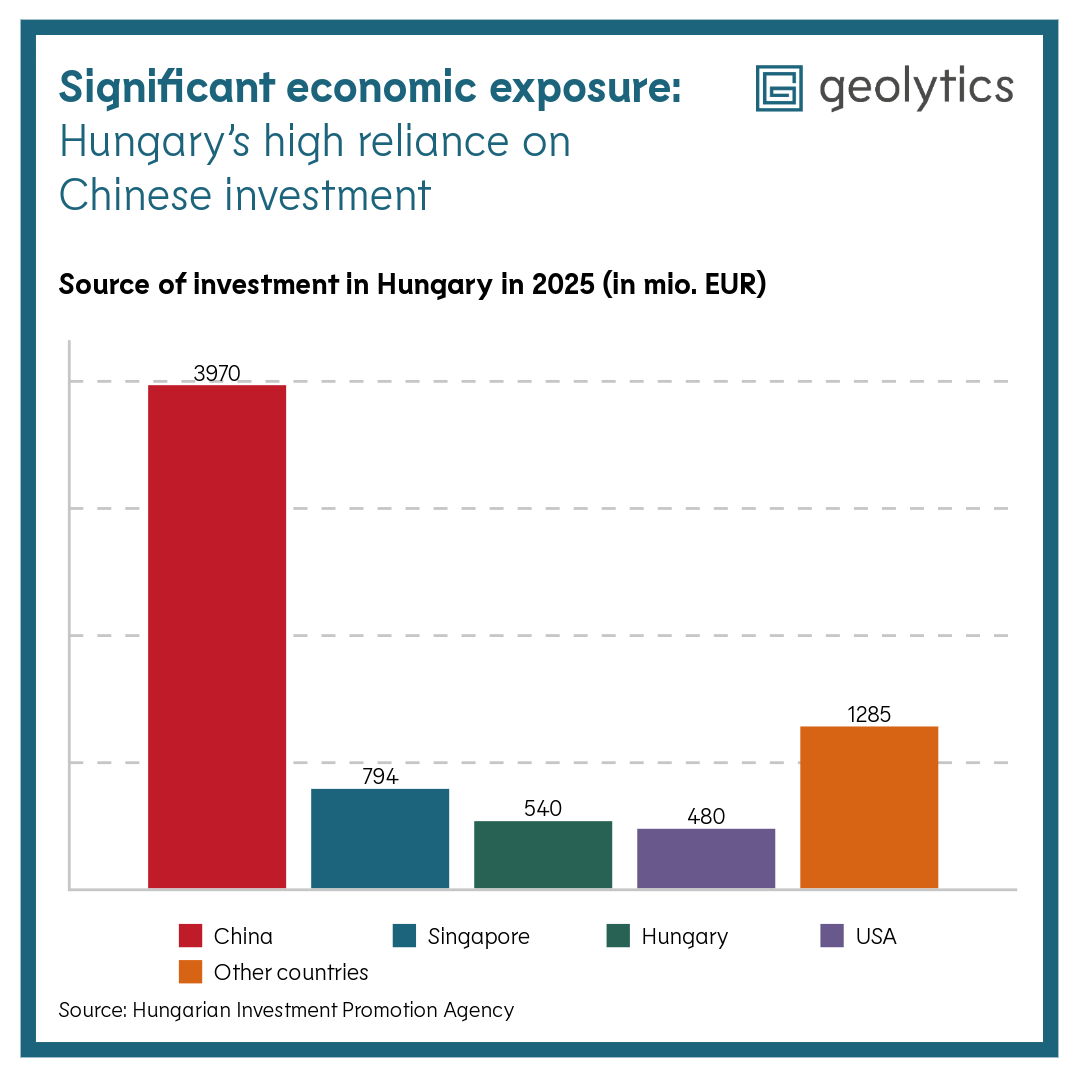
The new prime minister, Peter Magyar, has pledged to repair relations with Brussels and align more closely with EU foreign policy objectives. Our expert noted that while he has indicated that Hungary remains open to Chinese investment, his government is expected to take a more "balanced" approach compared to his predecessor's explicitly pro-China stance.
This likely means that while Budapest will not actively alienate Chinese investors, it will no longer obstruct EU efforts to criticize China. In practice, Chinese companies can expect stricter enforcement of Hungarian and EU regulations, particularly concerning labor and environmental standards.
For Chinese EV and battery manufacturers, this regulatory shift could lead to higher operating costs in Hungary, eroding some of the cost advantages the country previously offered.
For the European auto industry, the podcast concluded the impact may be more modest but is still notable. Increased scrutiny on Chinese suppliers in Hungary could create minor disruptions in the EV supply chain. At the same time, it could provide some "breathing space" for European EV makers competing with Chinese brands like BYD.
Ultimately, the political change in Budapest may contribute to a more unified EU stance on China, as one of the key dissenting voices within the European Council has been replaced by a leader more aligned with Brussels. This domestic election highlights how interconnected geopolitics and business have become, with a single vote having the potential to influence the future of entire industries.
To explore this topic further, you can find the full analysis mentioned in the podcast on

