


Geopolitics
China's chokepoint strategy: Export controls and the next phase of tech confrontation
Read more


In an “ever much more” scenario where U.S.-China tech rivalry continues, Washington increasingly tries to keep China at distance and China being successful in achieving significant own IT stack, we will most likely see two incompatible playbooks for tech stacks emerging until 2030. The U.S. is pushing a “China‑free” IT posture, issuing further export controls, data‑flow restrictions, and market‑access rules to keep Chinese technology out of U.S.‑linked ecosystems. Beijing, in turn, extends enforcement of local‑for‑local requirements: data localization, certified infrastructure, and algorithm filings. Both sides are embedding these measures into laws, regulations and standards, making a single global stack increasingly unrealistic.
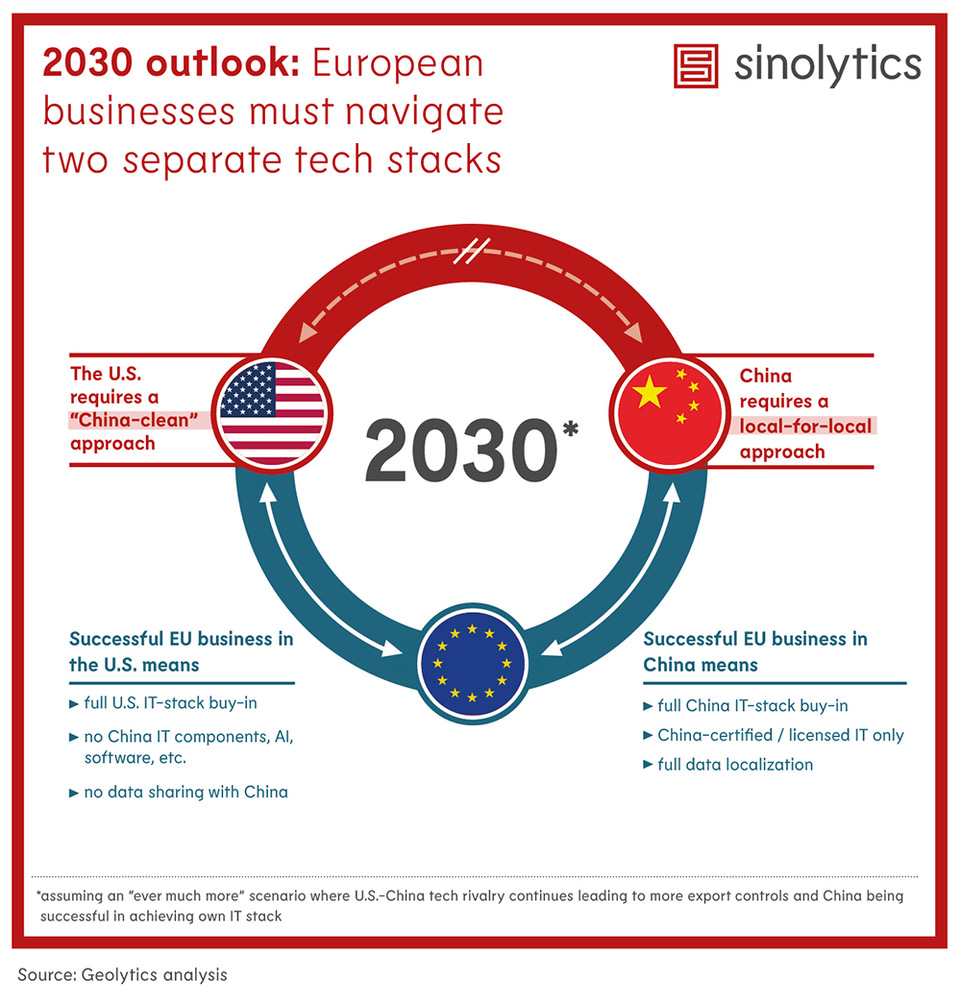
Success in the U.S. will increasingly imply full alignment with U.S.‑compliant stacks—no China‑origin chips, software, or cloud dependencies, plus strict data segregation. In China, companies must adopt China‑licensed IT, ensure end‑to‑end data localization, and comply with local AI rules.
European companies that want to operate globally, should plan for two distinct technology architectures. While this adds complexity and cost, it preserves market access on both sides and reduces regulatory risk in an era of accelerating tech bifurcation.

