


Geopolitics
China-linked supply chains: FCC restrictions expand across connected hardware
Read more


Prime Minister Lawrence Wong described the 2025 trade war as "deeply troubling" and U.S. tariffs as a "seismic shift in the world order." He characterized the blockade of the Strait of Hormuz as a dangerous precedent for weaponizing control over international waterways. These concerns are not unfounded: Indonesia has already floated the idea of tolls on the Strait of Malacca, the central trade route on which Singapore depends to an exceptional degree.
Despite U.S. punitive tariffs, Singapore's goods trade grew by eight percent in 2025, significantly outpacing global trade growth of around five percent. A contributing factor was the rerouting of Chinese goods through trading and logistics hubs like Singapore rather than direct export to the United States. In its role as a politically neutral trade platform, Singapore thus sees an opportunity amid an increasingly fragmented global economy. The other key driver was trade in hardware for the AI industry.
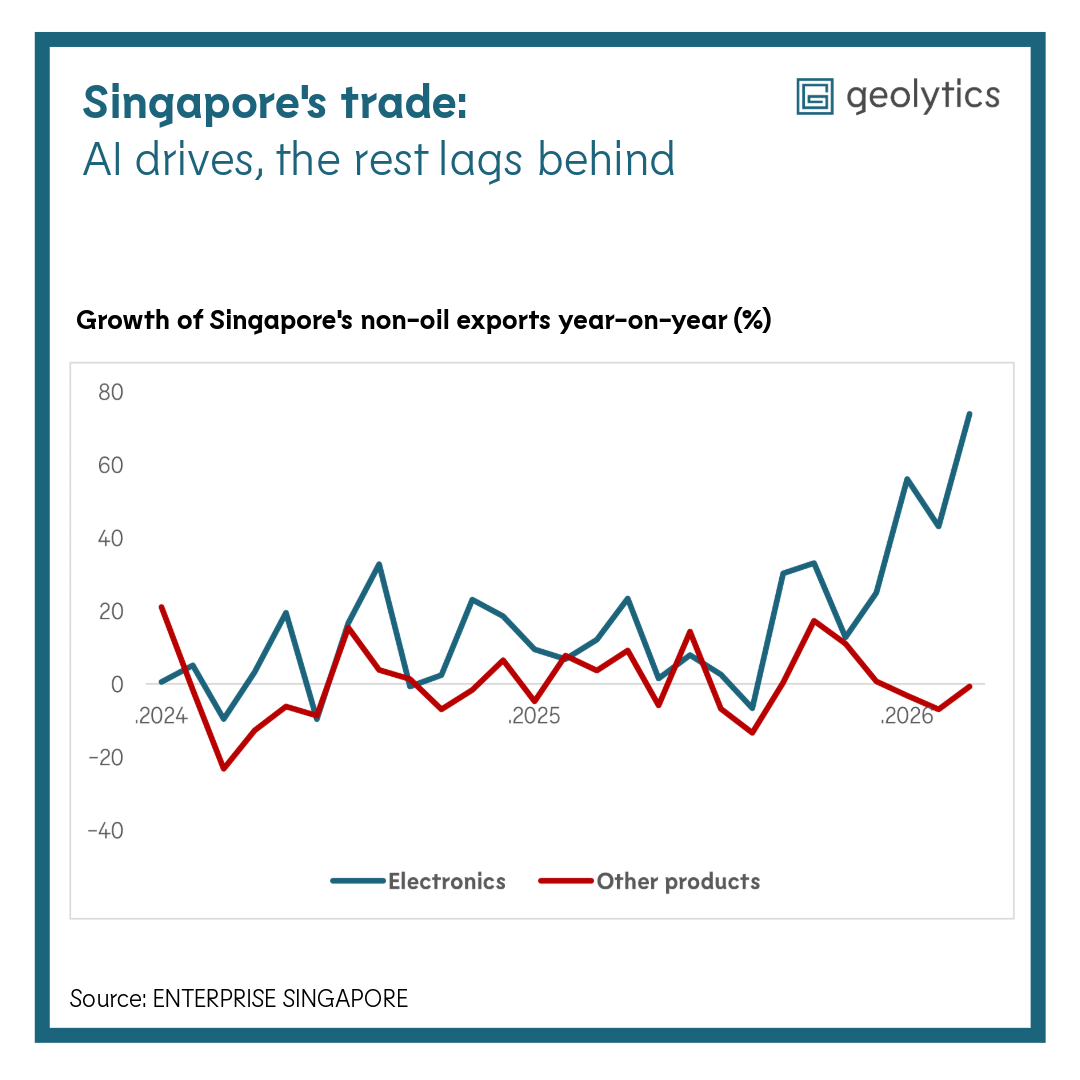
Yet with the blockade of the Strait of Hormuz, signs of slowing trade flows are multiplying. In the event of a sustained oil price shock, the WTO projects global trade growth of just 1.4 percent. Singapore tracks the development of its goods trade primarily through non-oil domestic exports. These grew four percent in February and 15 percent in March year-on-year. The growth, however, is highly uneven, which is cause for concern.
Driven by demand for AI industry hardware, electronics exports grew 60 percent year-on-year in the first quarter of 2026. Exports of other goods, including chemicals, machinery, and pharmaceuticals, posted declines. Strip out the AI sector and distinctly negative signals emerge across Singapore's goods trade.
The pressure on Singapore to act is mounting. At the end of 2025, the government launched a strategic review of the city-state's economic competitiveness, addressing nothing less than the adaptation of Singapore's positioning to a changed world economic order. Initial findings are expected by mid-2026. Prime Minister Lawrence Wong believes his country is fundamentally well-positioned for this challenge. Singapore, he argues, has built a network of like-minded states and continues to benefit from strong international trust in the "Singapore brand."
Originally published on F.A.Z. in German.

