Technology
Sishi Xie on China's semiconductor sector: fragmentation, policy, and what good analysis requires
Read more


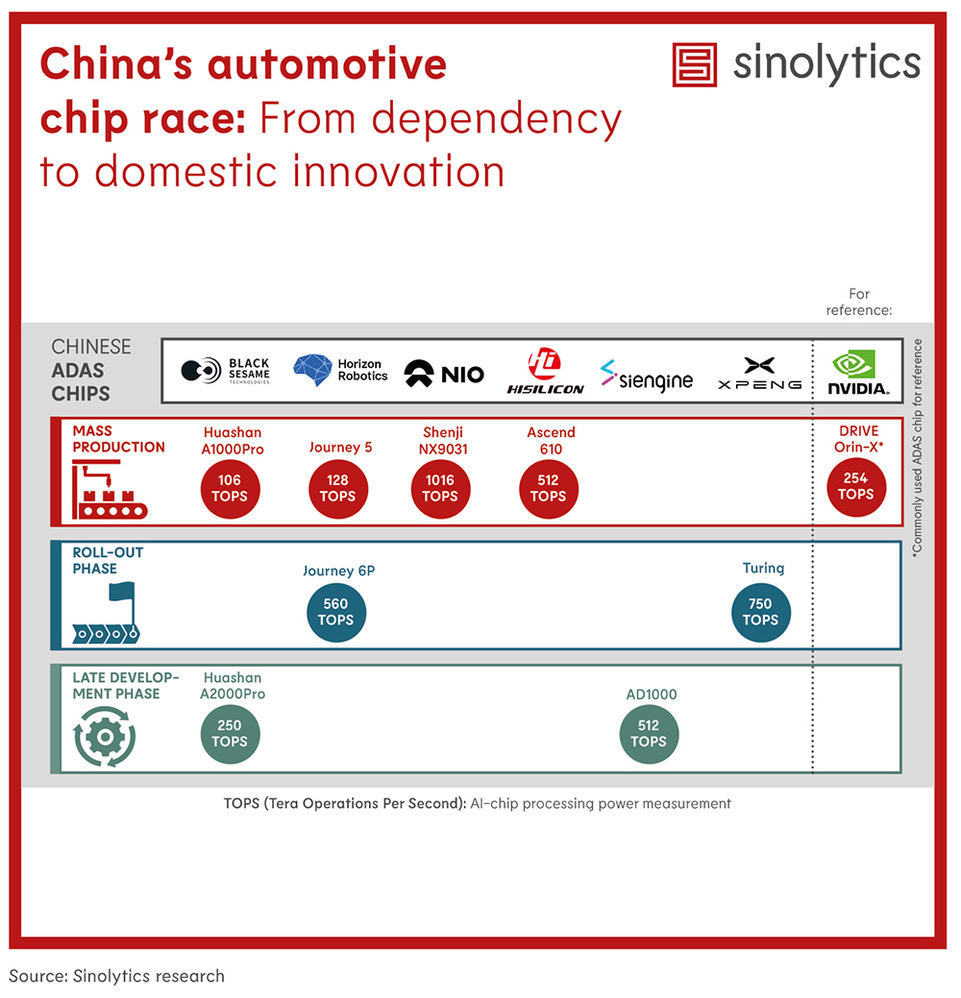
As vehicles become increasingly autonomous and software-defined, the demand for high-performance chips is surging. ADAS functions such as lane keeping, adaptive cruise control, and automated parking require powerful System-on-Chip (SoC) platforms. Until recently, Chinese automakers relied heavily on foreign suppliers, particularly U.S. firms like NVIDIA. Its Orin-X chip remains the most widely used ADAS processor in China's premium EV segment.
In response to escalating U.S. export restrictions, Beijing has designated semiconductors a strategic priority. Through state-backed funds, subsidies, and tax incentives, China aims to reduce reliance on foreign chipmakers and build a resilient domestic supply chain. Automotive chips, especially those for EVs and autonomous driving, are a key focus. Tariffs and inflated prices have further pressured local OEMs and Tier 1 suppliers to seek alternatives, accelerating the shift toward indigenous chip development.
Over the past five years, a growing number of Chinese technology companies and car manufacturers have entered the ADAS chip market. EV makers such as Nio and Xpeng already incorporate in-house developed SoCs in their latest models. BYD, China's largest EV manufacturer, collaborated with Horizon Robotics to build its "God's Eye" chip series based on the Journey platform. Li Auto has also announced its upcoming M100 chip, designed for ADAS applications. These moves signal a broader trend: vertical integration and chip self-sufficiency are becoming core strategies for China's automotive future.