


Geopolitics
China's semiconductor strategy: Anti-dumping probe targets U.S. analogue IC chips
Read more


China's tungsten exports to Japan have plummeted since Beijing’s January 2026 export restrictions, amid deteriorating China-Japan relations and heightened tensions over Taiwan. This is not an isolated incident; it is part of a broader strategy of economic coercion, with materials like rare earths and germanium also effectively cut off. The selective nature of the restrictions, with supplies to South Korea remaining unaffected, underscores the targeted pressure on Tokyo.
The current standoff was triggered by a sharp downturn in China-Japan relations after comments by Prime Minister Takaichi in November 2025 intensified Beijing’s concerns over Japan’s Taiwan policy. Subsequent policy moves in Tokyo further strained relations, with China’s Foreign Ministry reaffirming the export restrictions as recently as June 2026.
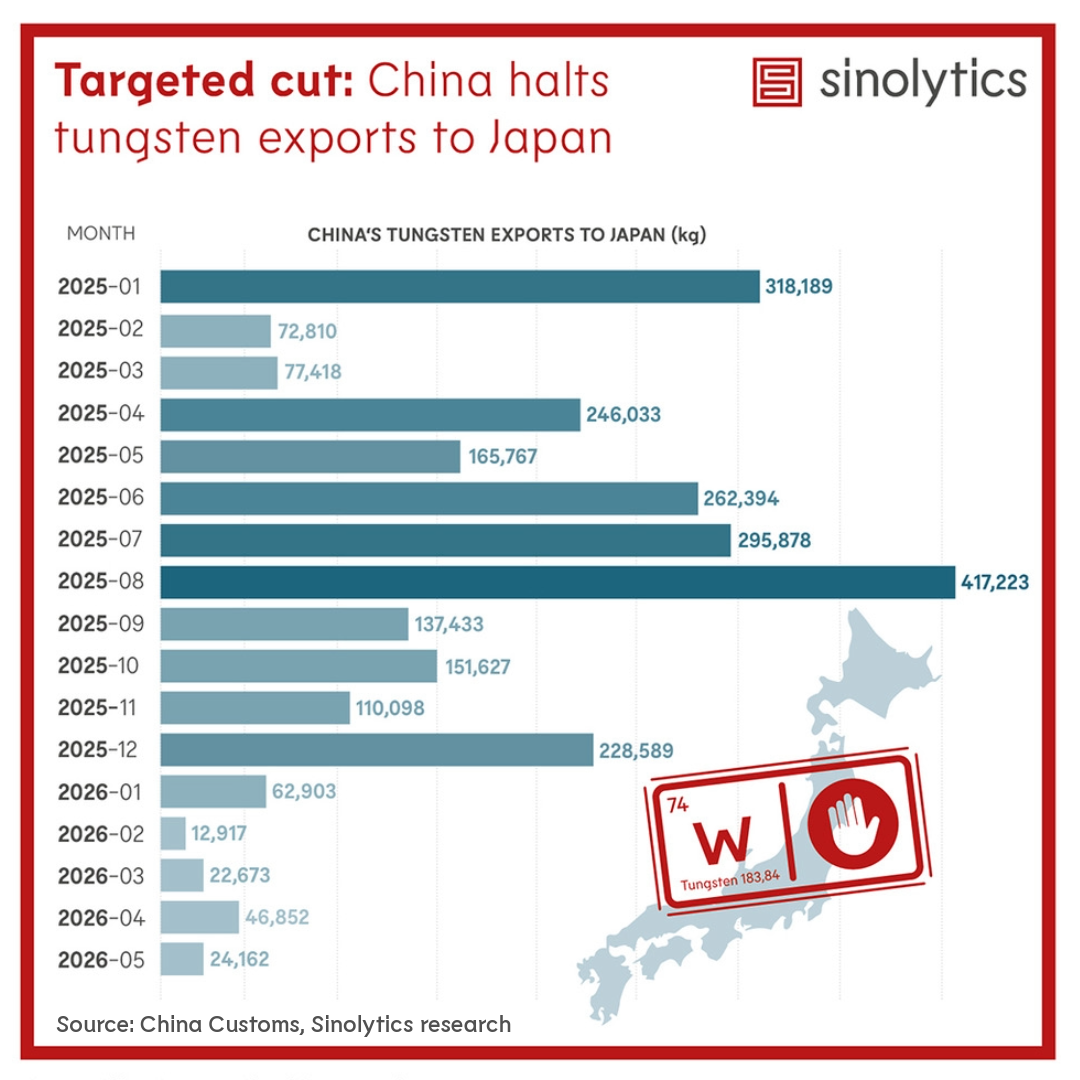
While the immediate impact of the tungsten cutoff is on Japan, the real shockwave will be felt by its downstream customers. Kanto Denka Kogyo and Central Glass, Japan’s two producers of tungsten hexafluoride (WF6), are ceasing production from July 1, 2026. This is a critical blow to the semiconductor industry, as WF6 is an irreplaceable gas used in the manufacturing of sub-7nm logic chips, HBM, and 3D NAND. The shutdown of these two companies will remove approximately a quarter of the global WF6 supply. The U.S. has already taken notice, with the Trump administration’s June request for Beijing to restore exports to Japan being swiftly rejected.
Header image is AI generated and serves illustration purposes only.

