


Geolytics
Meet Yuqi Cheng: Making AI useful for geopolitical decision-support
Read more


While Trump demonstratively rolled out the red carpet for Xi in Washington, the most important points of contention remained unresolved behind the scenes. Limited progress on tariffs and new channels for AI talks could not disguise this. On the most explosive issue, the looming expiration of the Busan agreement on November 10, both sides agreed only to a short extension. Delicate months lie ahead.
The truce agreed in Busan in October 2025 paused the sharpest escalations of the U.S.-China trade conflict: triple-digit U.S. tariffs and drastically tightened technology export controls on one side, and on the other, far-reaching Chinese export restrictions on additional critical raw materials and their production technologies, along with an extraterritorial licensing system for rare earths.
The fact that the expiration date was merely moved to January 10, 2027, is likely due above all to the Trump administration’s dissatisfaction. The U.S. accuses China of dragging its feet on export licenses for critical raw materials and on promised agricultural purchases. Chinese export data clearly show that shipments of most Chinese-controlled raw materials to the US either stopped entirely after the Busan agreement or remain well below pre-2025 levels. Only a few have returned to 2025 levels.
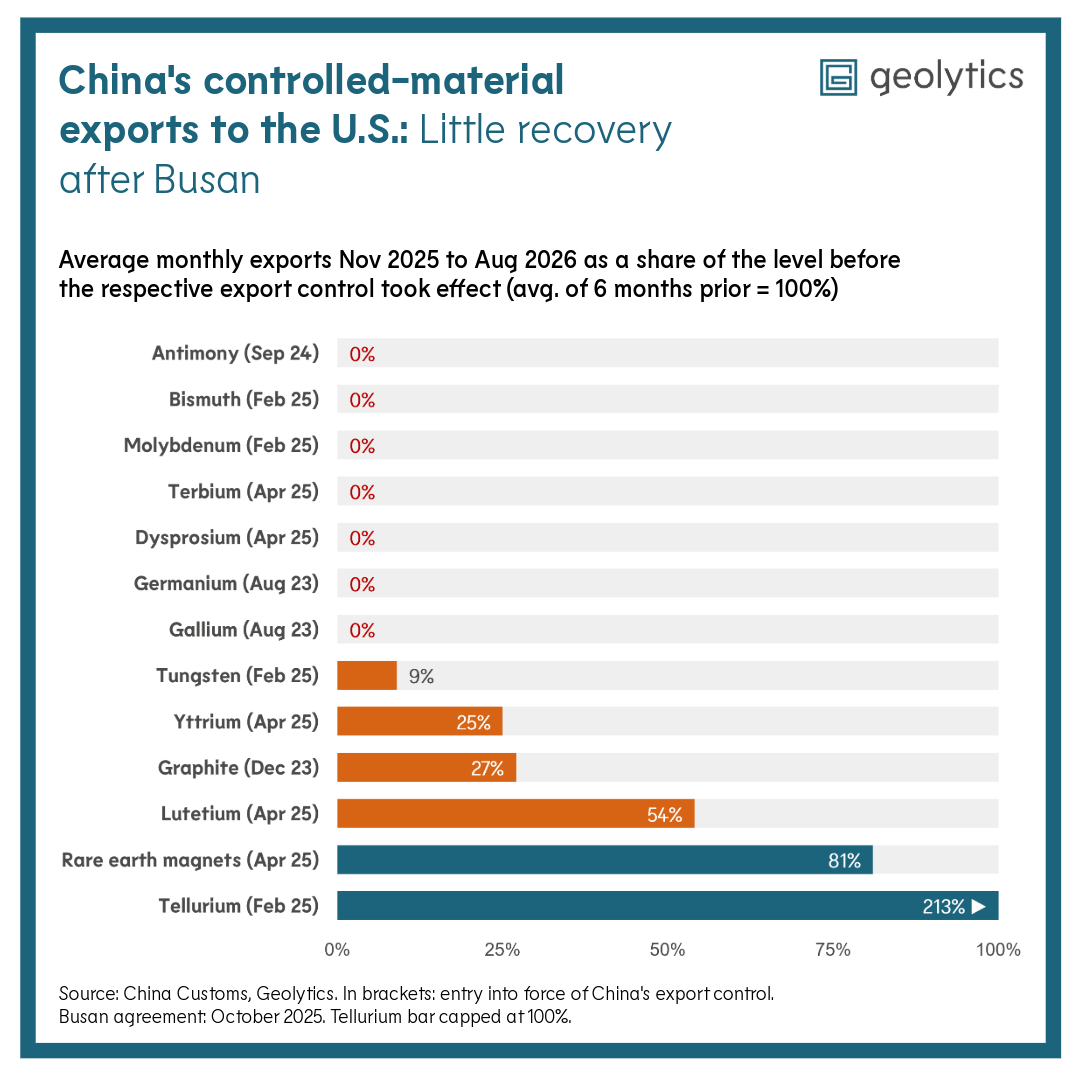
Beijing's sluggish implementation of the deal in turn signals discontent over the fact that the U.S. keeps imposing new trade and market access restrictions. Despite the agreement, Washington has added more Chinese companies to blacklists and banned a range of technology imports, including drones, advanced robots, internet routers, and energy technology.
Through the short extension, Washington maintains the threat of imminent escalation, hoping to extract concessions from Beijing by January. The end of the year will therefore be a test. The postponement gives both sides breathing room until after the contentious US midterm elections and the fifth plenum of the Chinese Central Committee. Before the deadline, the APEC summit in Shenzhen and the G20 summit in Miami are also on the agenda, where Trump and Xi are likely to meet again. The political calendar should prompt both governments to hold off on new trade restrictions for the time being.
The most likely scenario is that Washington and Beijing announce a further extension by January. Both sides are aware of the enormous costs of escalation but are also unwilling to make decisive concessions. A comprehensive, open-ended agreement therefore remains unlikely: the rivalry over technology leadership, supply chains, and industrial policy runs too deep. Beyond January, relations are likely to remain marked by trade policy jabs and targeted countermeasures. The truce buys both sides time, but it does not resolve the economic and technology conflict.
This article was originally published on F.A.Z. in German.

