


China Business
Price wars: The cost of China’s EV dominance
Read more


In 2024, exports grew by a steady 7.1%, but 2025 growth saw a sharp deceleration to just 2.3% as trade tensions and global electronics cycles hit a cyclical low. This created a "low base effect," meaning the 2026 rebound appears more dramatic because it is measured against an unusually weak prior year. While the 21.8% figure is headline-grabbing, it represents a critical catch-up phase as global inventory cycles bottom out and Chinese factories return to full capacity.
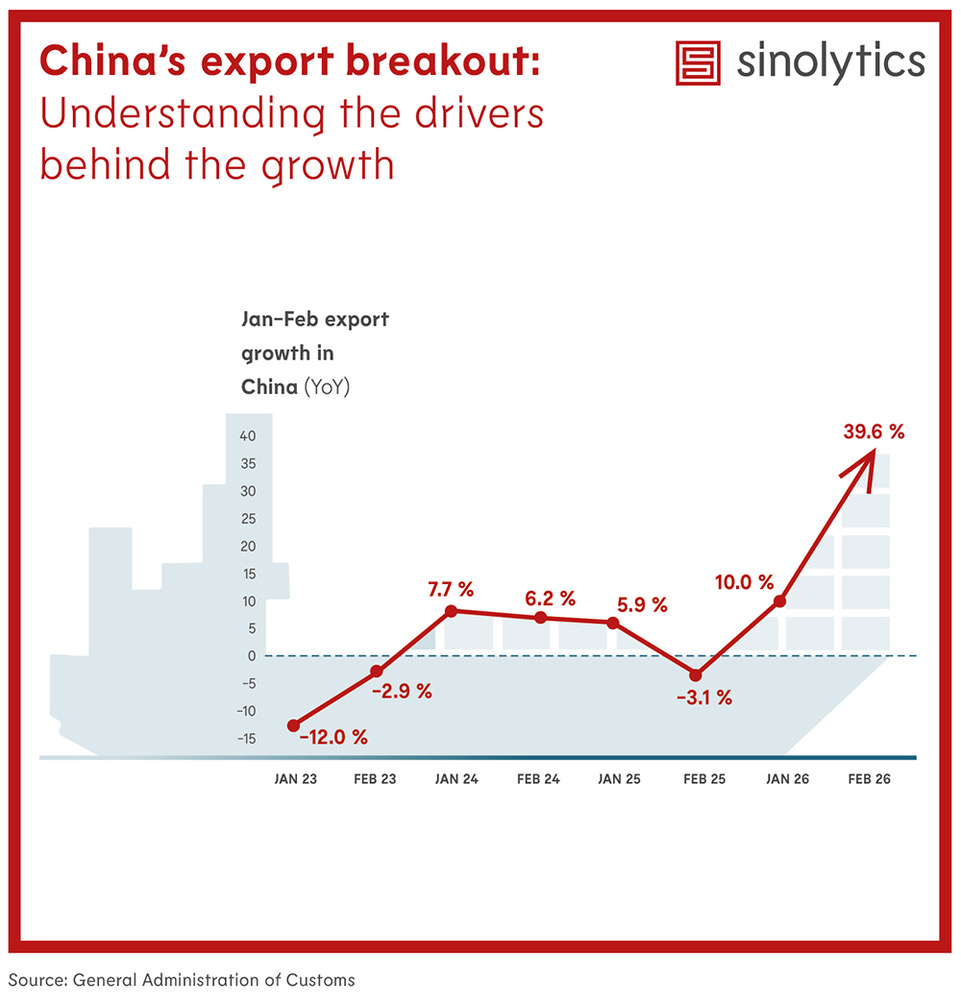
The primary psychological driver was the November 2025 U.S.-China agreement. This temporary stability triggered a massive release of "pent-up" orders that had been sidelined during the height of the 2025 trade frictions. However, business leaders should view this as a tactical window rather than a permanent peace; the agreement includes a "snap-back" clause, leading many firms to engage in "front-loading“, accelerating shipments now to avoid potential tariff hikes when the truce expires in late 2026.
While the truce calmed bilateral nerves, the 21.8% growth actually stems from China's successful pivot away from over-reliance on the American consumer. While exports to the U.S. have struggled to regain their pre-2025 momentum, growth to ASEAN countries (+29.4%) and the European Union (+27.8%) has skyrocketed. This "de-risking" strategy suggests that China is effectively re-routing its supply chains, using Southeast Asia as a secondary processing hub to mitigate future bilateral shocks with Washington.
The narrative regarding why China is winning varies significantly by source. Chinese state media attributes the growth to "New Quality Productive Forces," specifically the "New Three" (electric vehicles, lithium batteries, and solar products). Conversely, western outlets suggest this surge is fueled by "industrial overcapacity," where Chinese firms, facing weak domestic consumption, are aggressively lowering prices to offload goods into international markets. This pricing pressure is likely to trigger new anti-dumping investigations in emerging markets throughout the remainder of the year.

