


China Business
China–India trade: Indian electronics exports to China accelerate
Read more


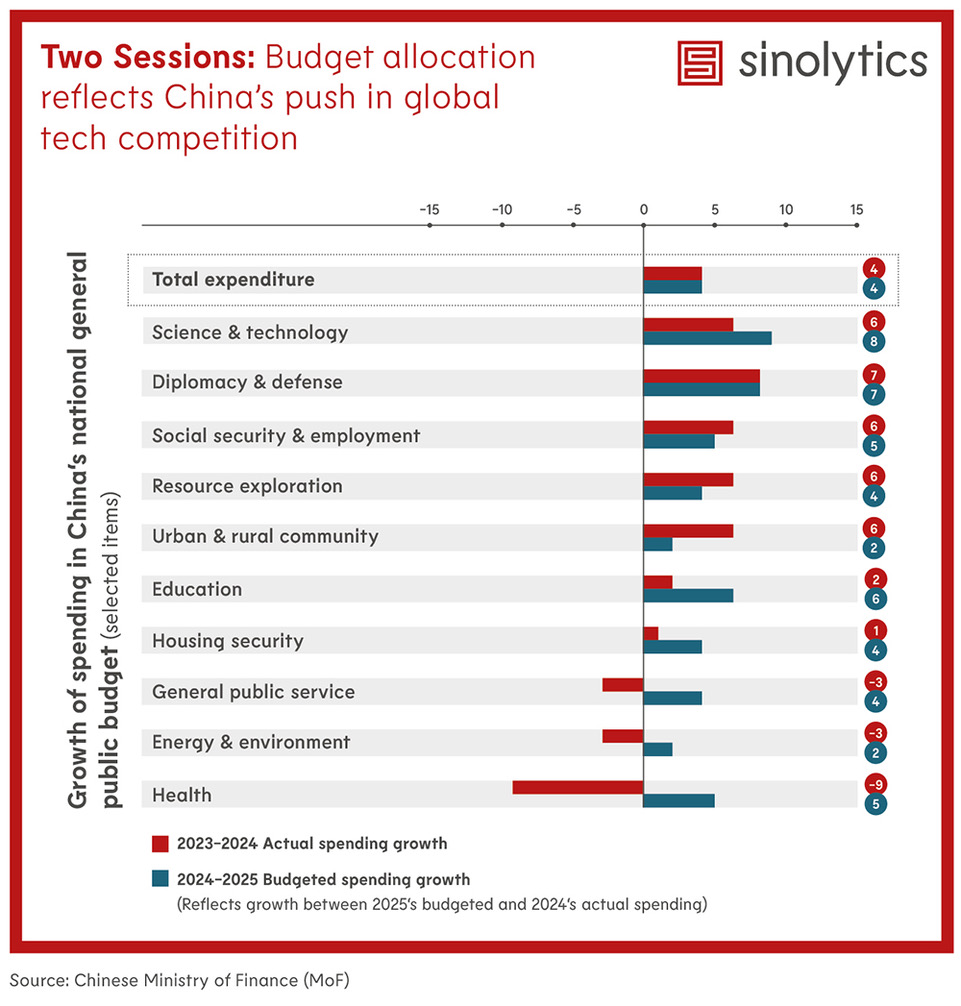
China’s recent Two Sessions underscored its strategic commitment to global technology leadership. A key outcome of the event was the notable boost in public funding for science, technology, and education — a clear signal of the country’s intent to drive innovation from within.
Despite facing intensifying tariffs and heightened technology competition, China set an ambitious growth target of “around 5%” for 2025. This goal reflects confidence in the country’s economic trajectory but also calls for significant stimulus measures to sustain momentum.
To meet its growth and development targets, China raised its deficit-to-GDP ratio from 3% to 4%. Alongside this adjustment, the government pledged more proactive and expansionary macroeconomic policies. These measures are intended to support a wide range of national objectives — from accelerating the development of future industries to deepening investment in basic research.
The public budget reflects these ambitions. Allocations for “science and technology” and “education” have seen consistent increases in both actual and projected spending from 2023 to 2025. This sustained growth highlights the central role these sectors play in China’s long-term strategy.
In addition to direct budgetary support, China is moving to expand its toolkit for funding innovation. At a recent press conference, the director of the National Development and Reform Commission (NDRC) announced plans to establish a National VC Guidance Fund. This initiative is expected to mobilize nearly 1 trillion yuan in investment targeting key frontier technologies, including AI, embodied intelligence, and 6G.
Through a combination of fiscal stimulus, public investment, and new funding mechanisms, China is sharpening its competitive edge in global tech — with science, education, and innovation at the heart of its economic strategy.


