

The year following the implementation of relaxed cross-border data transfer rules marked a significant shift for companies operating in China. By March 2025, security assessments had dropped by approximately 60%, and standard contract filings decreased by around 50%. These changes eased the compliance workload for many businesses and signaled a shift toward more predictable regulatory processes.
Administrative penalties for cyber and data security violations also declined sharply in 2024. This downward trend indicated a deliberate effort by authorities to create a more business-friendly environment amid ongoing economic pressures.
Despite the relaxation in certain areas, early 2025 brought a new wave of regulatory activity. Chinese authorities introduced stricter rules in several critical fields, particularly those involving personal data and emerging digital technologies.
Key measures include:
These new regulations are scheduled to take effect in the second and third quarters of 2025, giving companies limited time to adapt to the changing requirements.
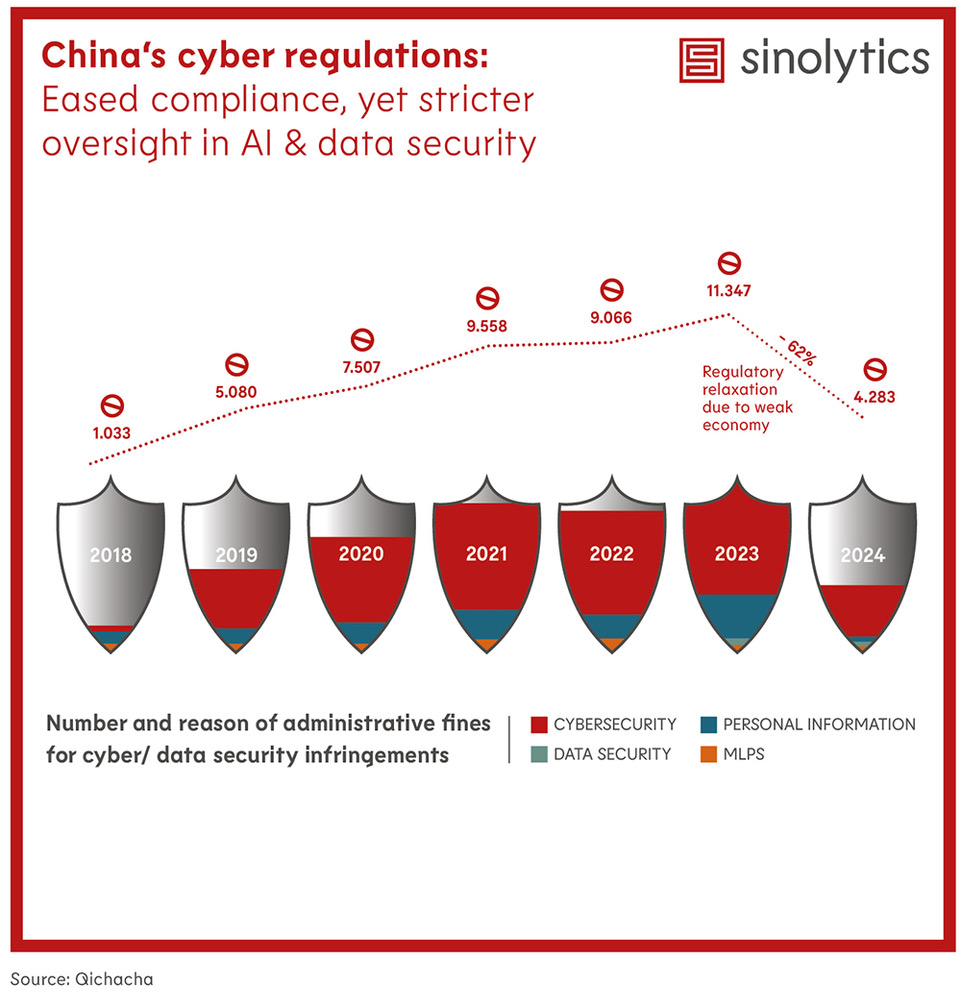
While some regulatory relief has been granted, companies dealing with large volumes of personal data or operating in sensitive digital sectors—such as AI—remain under close scrutiny. The overarching objective of Chinese authorities remains consistent: balancing technological innovation and economic growth with national security concerns.
Firms in these high-risk areas must continue to navigate a regulatory landscape that is not only complex but also subject to frequent changes. Compliance efforts will need to be both proactive and responsive as the oversight framework continues to evolve.
China’s cyber and data security regulations in 2025 reflect a dual approach: lowering compliance burdens to support business on one hand, while tightening oversight in strategically sensitive sectors on the other. For companies operating in China, the challenge lies in understanding and adapting to both currents—capitalizing on regulatory relief while staying ahead of new, sector-specific obligations.

