


Regulatory Strategy
China's cyber regulations: Eased compliance, yet stricter oversight in AI and data security
Read more


The newly issued Domestic Product Standards in Government Procurement now clarifies the definition of "domestic goods" based on local manufacturing, component sourcing and key process localization, bringing transparency but also setting a higher bar for foreign-invested companies to remain competitive.
The regulation defines 'Domestic Product' based on three criteria: production within China, component cost ratios, and localization of key components and processes. Products must undergo substantial transformation in China, with the proportion of domestically sourced components meeting thresholds to be set by the Ministry of Finance and relevant industry bodies. These thresholds will be critical in determining market access and should be closely monitored as they evolve.
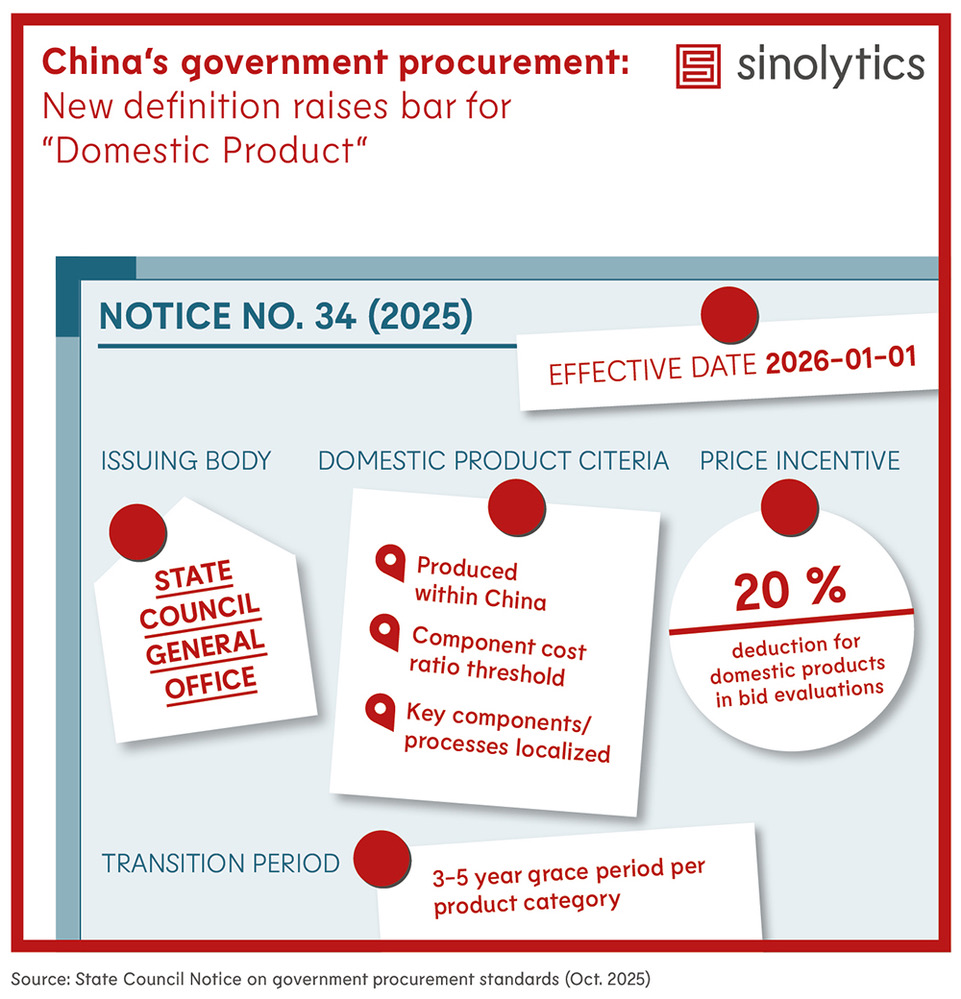
Domestic products receive a 20% price deduction during bid evaluations in government procurement. If a supplier’s domestic products account for 80% or more of the total cost in a procurement package, the entire bid benefits from the deduction.
Foreign suppliers face increased pressure to localize production and supply chains to qualify for domestic product status. The regulation outlines clear rules for determining whether components and processes are sufficiently localized.
The regulation will be rolled out over five years starting January 1, 2026, with a 3–5 year grace period for each product category.

