


Geolytics
Semiconductors: The car of the future will become a bit more Chinese
Read more


Geopolitically, India positions itself skillfully. The country pursues a multi-alignment strategy, including defense cooperation with the United States despite trade disputes, oil imports from Russia, and rapprochement with China. With the planned EU-India free trade agreement, India could present itself as a politically stable partner for Europe. Economically, however, India’s strengths differ fundamentally from China's.
German industry's
dependence on China
Germany's critical dependencies on China lie in raw materials, industrial
manufacturing, and key components for future technologies such as solar, wind,
and electric mobility. In these areas, India is unlikely to be competitive in
the foreseeable future. India’s opportunities lie elsewhere in the digital
ecosystem.
India's digital
economy and growth potential
With over one billion internet connections, government programs like Digital
India, roughly 2.5 million STEM graduates annually, and a young, tech-savvy
population, the digital economy offers the greatest growth potential,
particularly in e-commerce, fintech, and artificial intelligence. For decades,
India was synonymous with IT outsourcing. Today, it aims not only to write code
for others but also to develop its own product innovations, including
platforms, AI applications, and SaaS solutions.
Global capability
centers: India as a technology hub
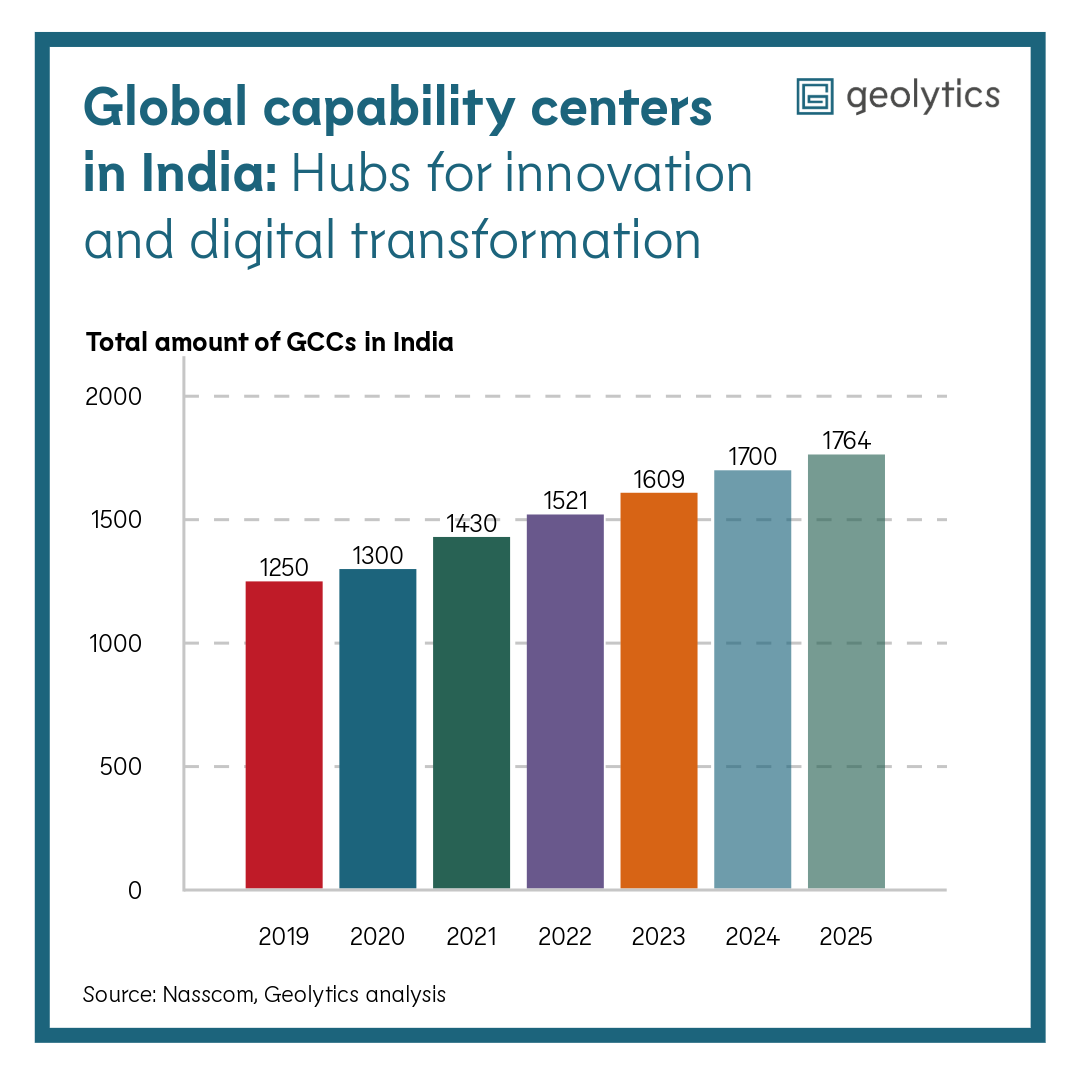
For German companies, this means establishing not just service centers but
so-called Global Capability Centers (GCCs), technology-focused research and
development hubs for engineering, AI, and digital transformation. SAP operates
its largest innovation site outside Germany in India and invested €194 million
this year in a new R&D campus in Bangalore to develop new AI solutions.
German mid-sized companies are also investing heavily. Knorr-Bremse opened its
new global AI center in Chennai in July 2025. ZF Lifetech relies on a
state-of-the-art GCC in Hyderabad for global development in passive safety
technology. According to data from the German Chamber of Commerce in India,
over 80 German companies operated roughly 150 GCCs in India in 2024, employing
around 130,000 professionals.
Strategic complement,
not a replacement for China
Whether India is building its own innovative capabilities or primarily
providing cost-effective solutions for global corporations remains unclear. One
thing is certain: in key areas, India is not a medium-term alternative to
China. However, it is a strategic complement for companies seeking to tap into
digital future markets.
Originally published on F.A.Z.

