


China Business
China–India trade: Indian electronics exports to China accelerate
Read more


Despite escalating trade frictions and geopolitical tensions, China’s exports delivered an unexpected bright spot in 2025. Shipments of electronics, machinery, and green tech surged, driving the trade surplus to a record high. This resilience underscores China’s entrenched role in global supply chains—even as Western economies sought diversification.
In stark contrast, retail sales of consumer goods grew at a muted pace and deteriorated further throughout the year. Weak household confidence, a cooling property market, and limited income growth weighed heavily on spending. The imbalance between external and internal demand became more pronounced, raising alarms about the sustainability of China's growth model.
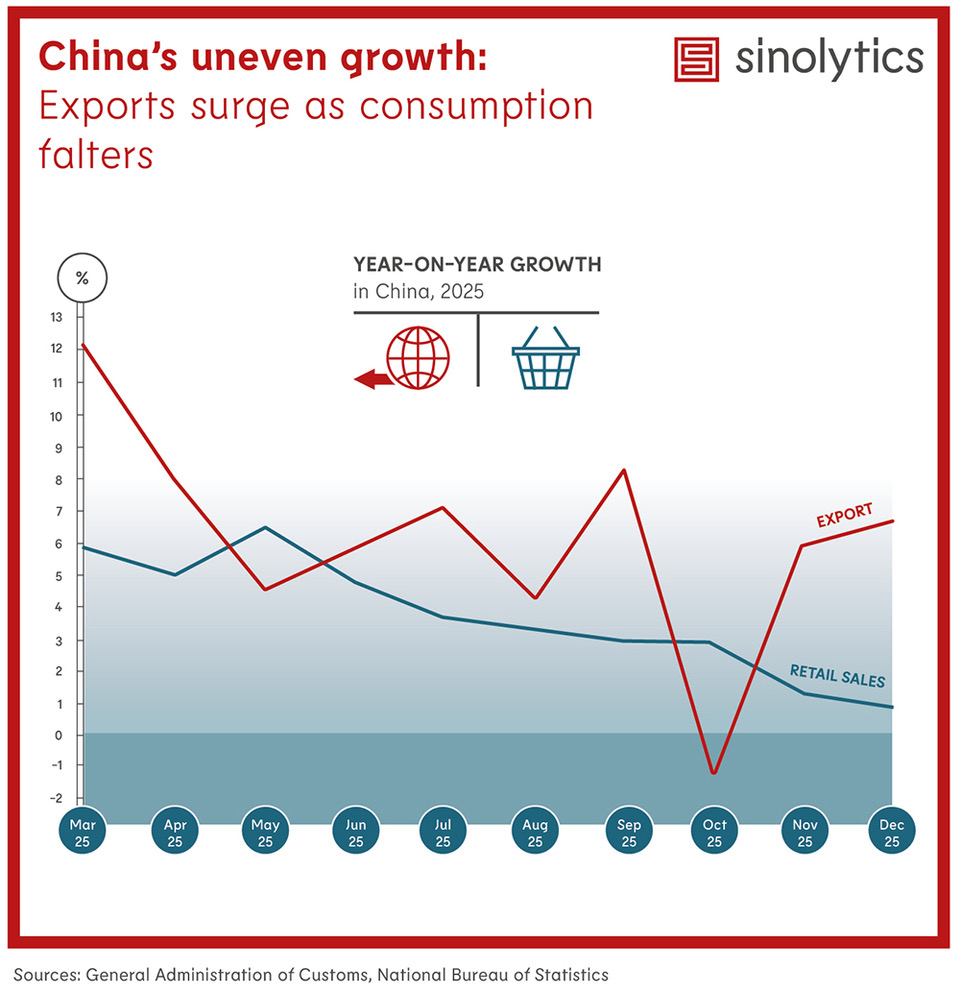
China managed to achieve its "around 5%" GDP growth goal, but the reliance on exports rather than domestic consumption signals structural vulnerabilities. Policymakers now face the challenge of rebalancing growth drivers amid global uncertainty.
Looking ahead, Beijing is prioritizing measures to stimulate domestic demand, ranging from tax incentives to social safety net enhancements. With trade tensions persisting, lifting household consumption is no longer optional; it's imperative for economic stability.

